
neosoft.ca

Blog Neosoft Technologies

Cover-CAN Bus dans LabVIEW

How to Integrate CAN Bus in LabVIEW

Building Reliable CAN Communication Systems for Industrial and Embedded Applications

The CAN bus protocol has become a standard in industries requiring robust, deterministic and real-time communication between electronic systems.

From electric vehicles and battery management systems to industrial automation and aerospace platforms, CAN Bus is widely used for reliable embedded communication.

Combined with LabVIEW, engineers can rapidly develop powerful monitoring, control and automated test systems capable of interacting with complex CAN networks.

In this article, we explore how to integrate CAN Bus in LabVIEW, the common challenges involved and the best practices for building scalable industrial applications.

Context

Modern industrial and embedded systems increasingly rely on distributed architectures where multiple devices must communicate efficiently in real time.


CAN Bus is commonly used in:

  • automotive systems
  • EV battery platforms
  • aerospace validation benches
  • industrial controllers
  • robotics
  • embedded monitoring systems


Engineering teams often need to:

  • monitor CAN traffic
  • send commands to ECUs
  • log communication data
  • validate embedded devices
  • synchronize CAN communication with automated testing systems


LabVIEW provides an ideal environment for developing these applications thanks to its strong hardware integration and real-time capabilities.

The Challenge

Integrating CAN Bus into an industrial system is not simply about reading and writing frames.


Real-world applications often involve:

  • high communication loads
  • deterministic timing requirements
  • multiple CAN channels
  • complex DBC databases
  • synchronization with DAQ systems
  • hardware triggering
  • automated validation sequences


Engineers also face challenges such as:

  • bus errors
  • frame timing issues
  • signal decoding
  • synchronization between systems
  • scalability of software architectures


Without the right architecture, CAN systems can quickly become difficult to maintain and debug.

The Solution

A robust CAN Bus integration strategy in LabVIEW generally combines:

  • NI CAN hardware
  • scalable software architecture
  • database-driven signal decoding
  • automated logging and validation tools


At Neosoft Technologies, CAN integration projects are typically designed around modular and scalable architectures allowing:

  • real-time communication
  • synchronized acquisition
  • automated testing
  • advanced diagnostics
  • long-term maintainability

CAN Bus Integration in LabVIEW

> Hardware Integration

LabVIEW can interface with multiple CAN hardware platforms including:

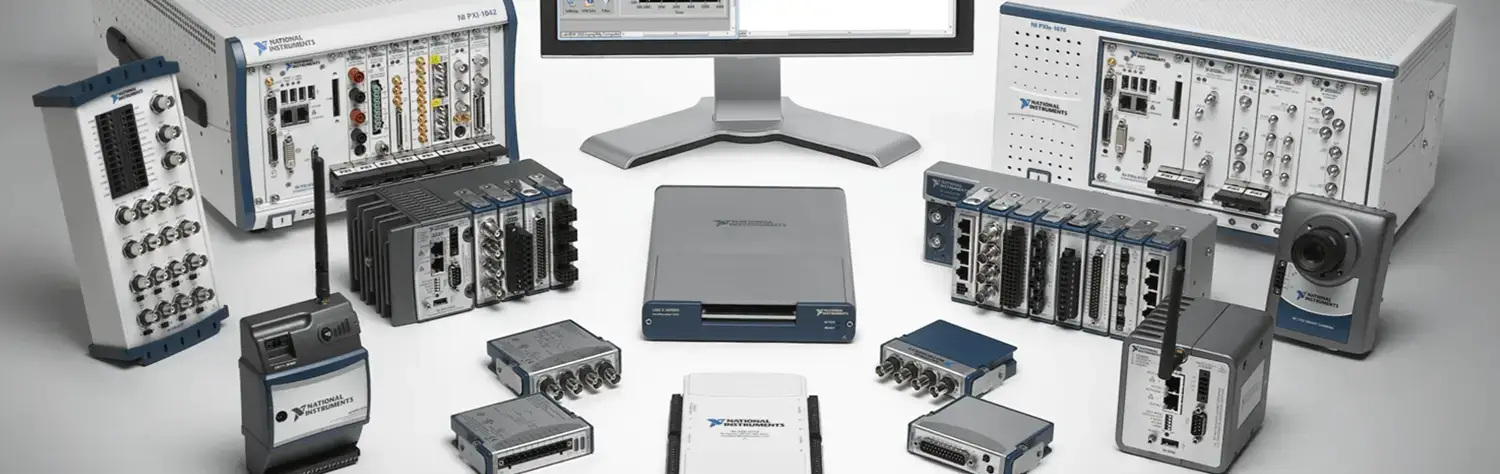
  • NI-XNET
  • PXI/PXIe CAN modules
  • CompactRIO
  • USB CAN interfaces


This allows engineers to build systems ranging from simple monitoring tools to complex multi-channel validation benches.


> Signal Communication

Using NI-XNET APIs, LabVIEW applications can:

  • transmit CAN frames
  • receive messages
  • decode signals
  • monitor bus activity
  • log communication data


Engineers can also integrate:

  • CAN FD
  • J1939
  • UDS
  • XCP
  • automotive communication protocols


> DBC Database Integration

DBC files allow automatic interpretation of CAN signals.

LabVIEW can use DBC databases to:

  • decode raw frames
  • scale engineering values
  • simplify signal mapping
  • accelerate software deployment


This significantly reduces development complexity for large CAN systems.

Advanced Industrial Architectures

Modern CAN applications frequently integrate:

  • PXI systems
  • FPGA synchronization
  • real-time controllers
  • HIL simulation
  • battery cyclers
  • embedded Linux devices


Typical applications include:

  • BMS validation
  • aerospace avionics simulation
  • industrial machine control
  • EV testing systems

Technologies Commonly Used

Typical CAN Bus architectures developed by Neosoft Technologies integrate:

  • LabVIEW
  • NI-XNET
  • PXI
  • CompactRIO
  • TestStand
  • CANalyzer
  • CAN FD
  • Modbus TCP
  • Ethernet communication
  • SQL logging systems

Results & Benefits

A properly integrated CAN Bus architecture provides:

  • reliable communication
  • deterministic performance
  • simplified diagnostics
  • synchronized acquisition
  • scalable validation systems
  • improved traceability
  • faster development cycles


For industrial organizations, this results in:

  • reduced debugging time
  • improved system reliability
  • accelerated validation
  • easier maintenance

Final Thoughts

CAN Bus remains one of the most important communication protocols in industrial and embedded engineering.

Combined with LabVIEW, it enables the development of highly reliable and scalable systems for:

  • automated testing
  • embedded validation
  • industrial monitoring
  • real-time control


As modern systems continue to grow in complexity, robust CAN integration architectures become essential for long-term performance and maintainability.

Featured Insights

How can we help you?

Receive a personalized response from our experts within 24 hours, with solutions tailored to your automation and data acquisition needs.