neosoft.ca

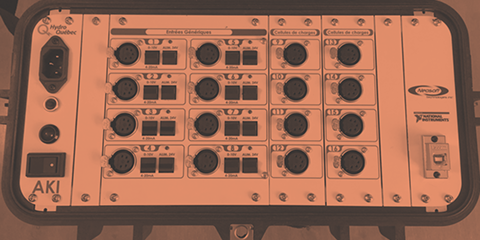
Cover Station de calibration automatisée pour cellules de charge

Automated charge cell calibration station

Share the article:

context of the project

In mechanical testing environments, the accuracy of force measurements is critical. The load cells used in test benches must be calibrated regularly to ensure the reliability of results and the traceability of measurements.

An aerospace testing laboratory was already using an internal station to calibrate its force sensors. However, the software and hardware infrastructure of this system had been developed several years earlier and no longer met current requirements in terms of automation, maintainability, and data traceability.

The objective of the project was therefore to modernize the existing calibration station by replacing the software application and improving the integration between the calibration machine, the sensors, and the data acquisition system.

Neosoft Technologies was commissioned to design and deploy a complete solution to automate the calibration procedures while improving the user experience and data management.

Principle of calibration of load cells

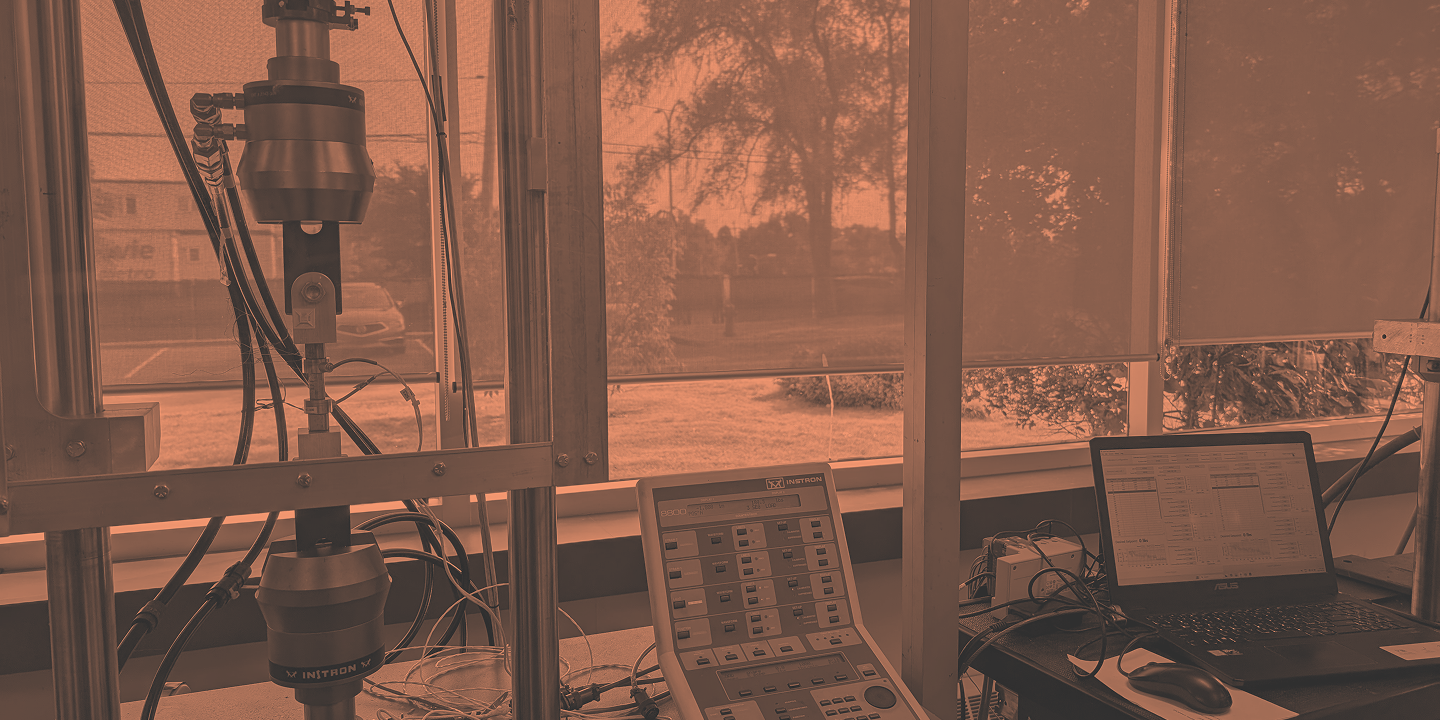
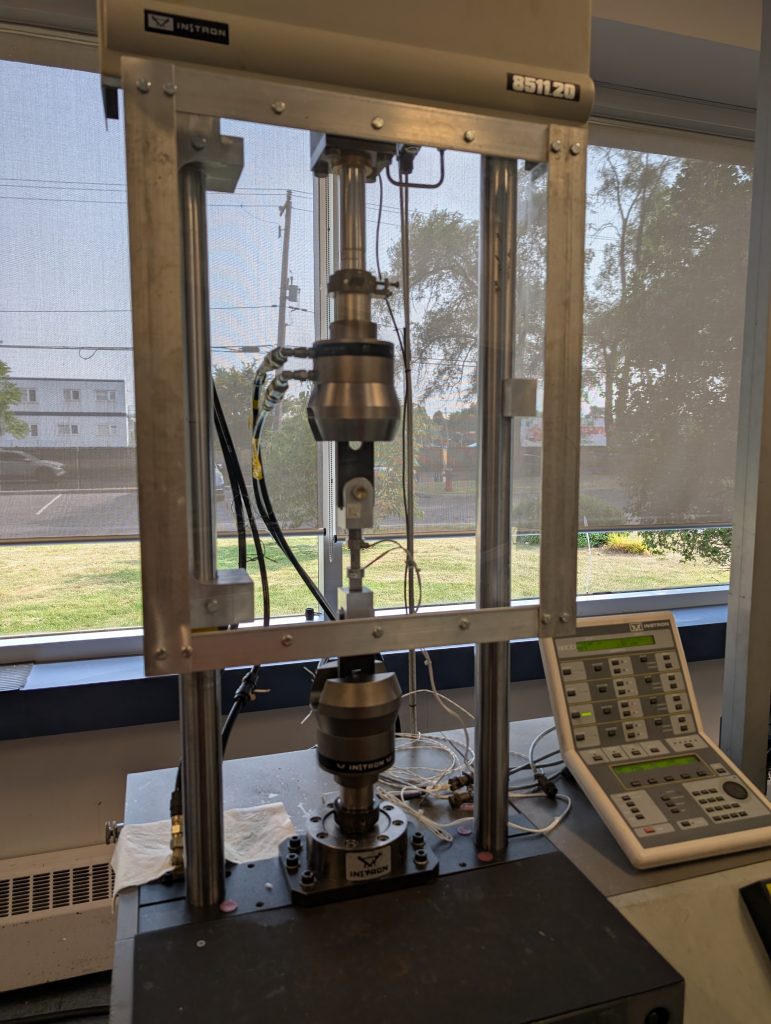
The calibration station is based on a precision hydraulic press used as a force reference. In this configuration, the press can apply controlled loads with high accuracy, both in compression and tension.

When a load cell needs to be calibrated, it is installed in the mechanical fixture of the press. A sequence of predefined loads is then progressively applied by the machine. For each load level, the system simultaneously measures the force applied by the press and the electrical signal generated by the sensor.

The load cells used in this type of application are generally based on strain gauges configured in a Wheatstone bridge. The output signal of the sensor is expressed in millivolts per volt of excitation (mV/V) and varies proportionally with the applied load.

By comparing the reference force values with the measured signal, it becomes possible to accurately determine the calibration coefficients of the sensor.

Mechanical system configuration

The station allows sensors to be calibrated using different mechanical configurations in order to cover multiple load ranges.

In the simplest configuration, a single load cell is installed on the hydraulic press. This setup is used for the standard calibration of individual sensors.

In some situations, two load cells can be mounted in series within the mounting system. This configuration makes it possible to increase the load capacity or to calibrate multiple sensors within the same mechanical setup. The sensors are installed between the mounting elements and the hydraulic grips of the press, ensuring precise mechanical alignment during load application.

The entire assembly is designed to ensure uniform force distribution and to avoid any parasitic stresses that could influence the measurements.

Development of the calibration application

To modernize the station, Neosoft developed a new software application dedicated to sensor calibration.

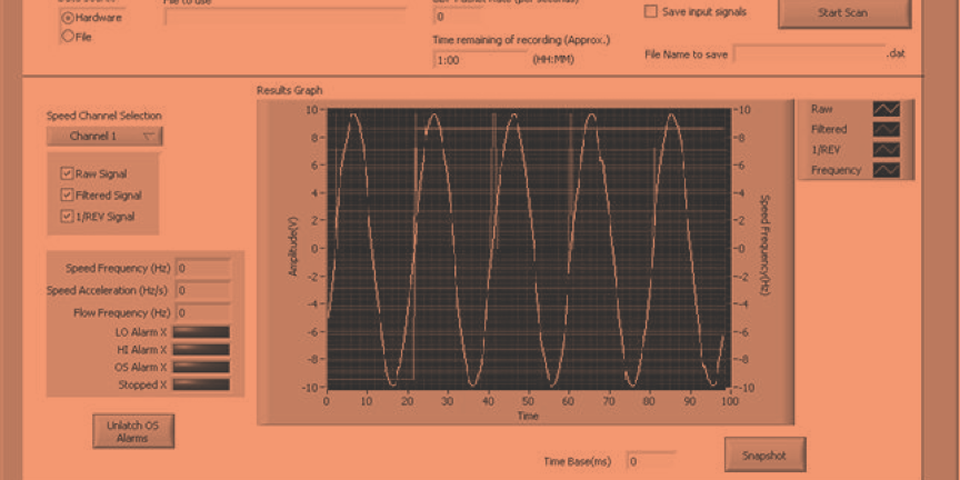
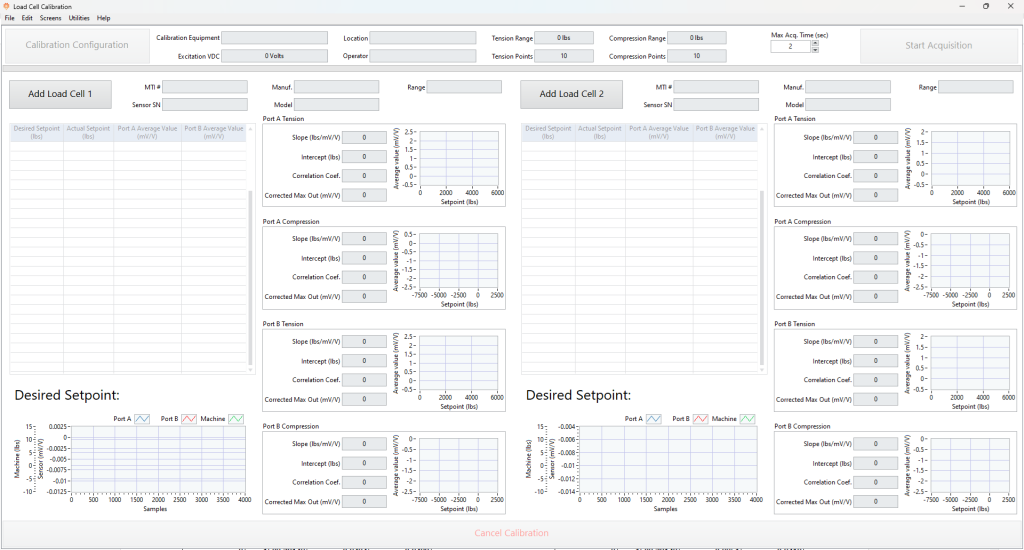
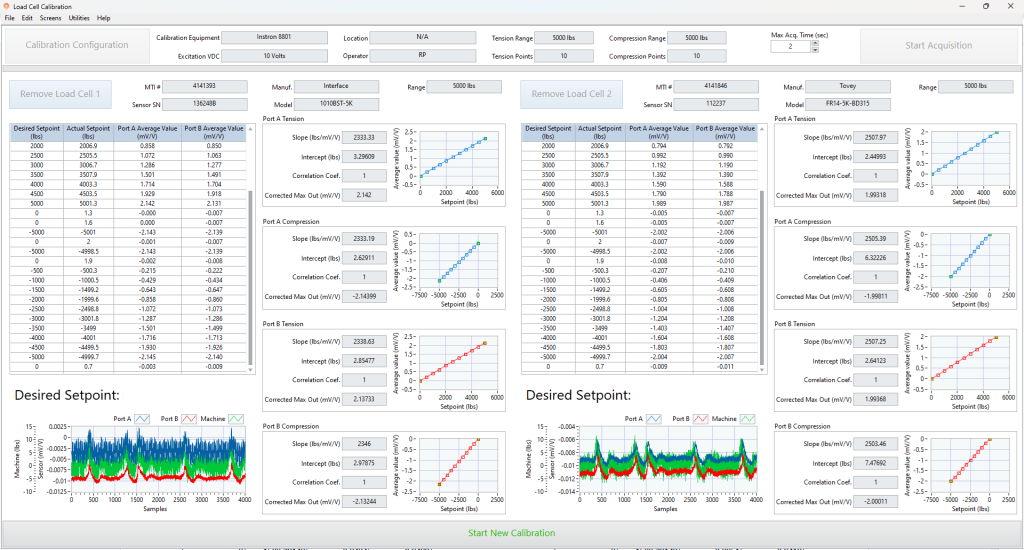
The application controls the entire calibration process, from signal acquisition to result analysis. It allows operators to define load sequences, visualize data in real time, and automatically generate calibration reports.

The software also manages the calibrated sensors, enabling the storage of calibration history and improving measurement traceability. The user interface was designed to simplify system operation and reduce the risk of errors during calibration procedures.

Screenshot main terminé

Integration of TEDS technology

The calibration station also supports sensors that integrate TEDS (Transducer Electronic Data Sheet) technology.

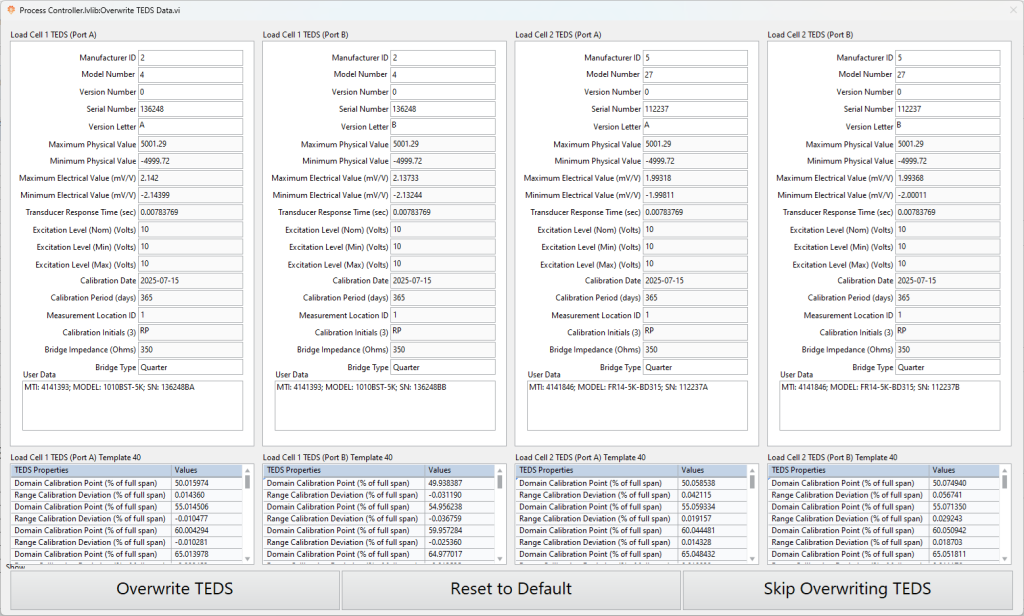
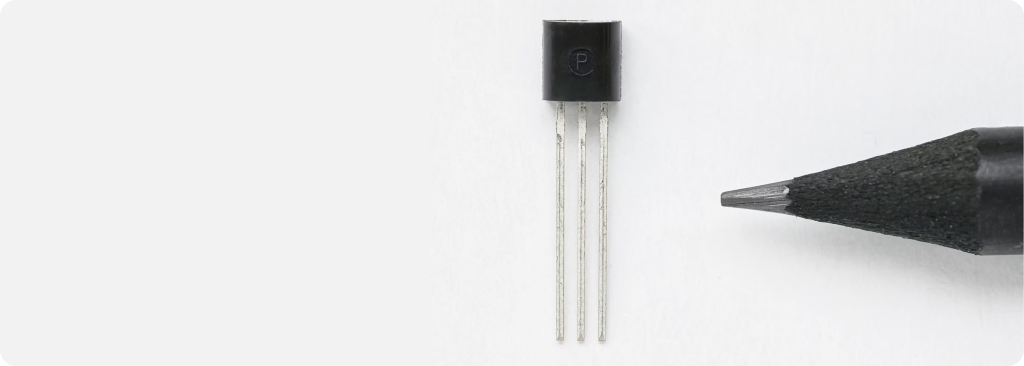
This technology embeds a small electronic memory directly into the sensor connector. This memory stores essential information such as the sensor model, serial number, electrical characteristics, and calibration parameters.

When a TEDS-compatible sensor is connected to the system, the application can automatically read this information and identify the sensor without any manual intervention. This significantly simplifies sensor management and reduces the risk of errors during the configuration of the measurement system.


Discover our blog post about TEDS technology

Technologie TEDS pour capteurs

Project results

The modernization of the calibration station has significantly improved the calibration operations for force sensors.

The automation of the process now makes it possible to perform calibration sequences more quickly and with greater repeatability. Operators benefit from a more intuitive interface to configure tests and analyze results.

The automatic generation of reports and centralized data management also improve calibration traceability, which is an essential requirement in regulated testing environments.

Thanks to this new station, the laboratory now has a calibration system that is more reliable, more efficient, and easier to maintain, capable of meeting current validation and metrology requirements.

Related Case Studies​​

Among our key projects:

Cover-Système de traitement de fréquences pour turboréacteurs

Frequency Processing System for Jet Engines

This project replaced an obsolete electronic board with a new frequency processing system for jet engines. Developed on an NI CompactRIO platform using LabVIEW Real-Time and FPGA, it ensures reliable signal acquisition, real-time analysis, and long-term system performance.
Read more

By choosing Neosoft for your custom software consulting and development needs, you benefit from recognized expertise, a personalized approach, and cutting-edge technologies to optimize your processes and ensure the quality of your products.

To discuss your specific needs, feel free to contact us.