

Understanding TEDS Technology for Sensors
In modern measurement systems, sensor configuration can quickly become complex. Different sensor types, calibration coefficients, measurement ranges, and acquisition parameters all need to be properly defined before reliable data can be collected.
TEDS technology (Transducer Electronic Data Sheet) simplifies this process by allowing sensors to store their own identification and calibration information directly within the device.
This technology makes it possible for compatible data acquisition systems to automatically recognize sensors and configure the measurement parameters accordingly.
What Is TEDS Technology?
TEDS (Transducer Electronic Data Sheet) is a technology defined by the IEEE 1451 standard, which enables a small electronic memory to be embedded directly into a sensor or its connector.
This memory acts as a true digital identity for the sensor and can be automatically read by a compatible data acquisition system, significantly simplifying installation and setup.
In practice, when a TEDS-enabled sensor is connected, the system can:
- automatically identify the sensor
- instantly retrieve its calibration parameters
- configure the acquisition without any manual intervention
One of the key advantages of this technology is its ability to adapt to a wide variety of sensors and applications, including pressure, temperature, acceleration, and force sensors. This allows for standardized installations while maintaining flexibility, even in complex or evolving test environments.
TEDS helps reduce human errors, accelerate deployment, and simplify the replacement or addition of sensors without time-consuming reconfiguration.
These are often referred to as “smart sensors,” as they are capable of self-identification and seamless integration into their measurement environment.
To learn more about implementation with NI solutions:
https://www.ni.com/en/support/documentation/supplemental/06/sensor-calibration-with-teds-technology.html
What Information Is Stored in a TEDS?
A TEDS module can store several types of information related to the sensor.
This typically includes identification data such as the manufacturer, sensor model, and serial number. Electrical characteristics such as sensor type, sensitivity, and measurement range may also be included.
Calibration parameters can also be stored, allowing the measurement system to apply the correct scaling factors automatically. In many cases, the measurement units and other configuration details are also embedded in the memory.
These parameters are stored in a small EEPROM memory device, which is often integrated directly into the sensor connector.
How TEDS Sensors Are Read
When a sensor is connected to a TEDS-compatible system:
-
The system detects the presence of the TEDS memory
-
The data stored in the EEPROM is read
-
The software automatically configures the acquisition parameters
This eliminates much of the manual configuration normally required when installing a sensor.
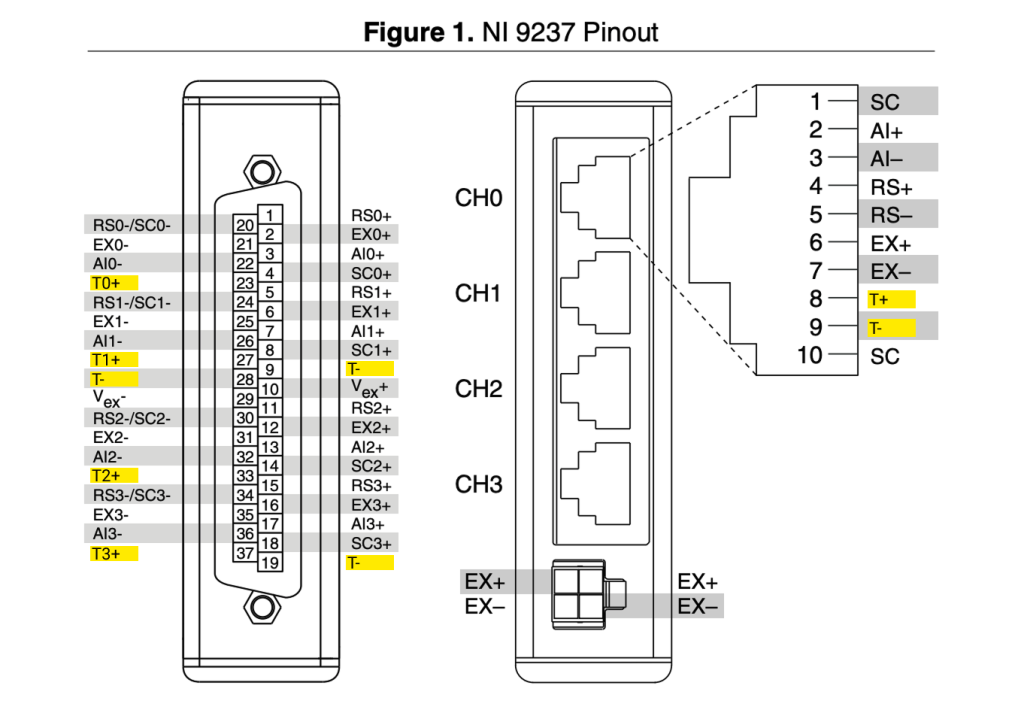
Example Application: Load Cell Calibration
TEDS technology is particularly useful in applications involving sensor calibration, such as load cell calibration systems.
When a load cell equipped with TEDS is connected to the measurement system, the software can automatically identify the sensor and retrieve its characteristics. Calibration coefficients and sensor parameters can be loaded automatically, ensuring that the correct configuration is used for the measurement.
This simplifies sensor management and improves traceability when working with multiple sensors that require regular calibration.
Discover our realization on the automated calibration stations for load cells
Advantages of TEDS technology
Automatic configuration
The sensor parameters are automatically applied.
Reduced human errors
Errors related to manual parameter entry are eliminated.
Time savings
Sensor configuration is almost instantaneous.
Improved traceability
Sensor information remains associated with the acquired data.
Limitations and Considerations
Although TEDS offers many advantages, several factors must be considered when implementing this technology.
Not all sensors support TEDS, and the data acquisition hardware must be compatible with the IEEE 1451 standard in order to read the embedded information.
Additionally, when sensors are recalibrated, the TEDS data may need to be updated to ensure that the stored parameters remain accurate.
Conclusion
TEDS technology represents an important advancement in the field of instrumentation and data acquisition.
By allowing sensors to store their own identification and calibration information, it simplifies system configuration, improves measurement traceability, and reduces the risk of configuration errors.
In automated testing environments and sensor calibration systems, TEDS technology provides an efficient way to manage and integrate large numbers of sensors.

Featured Insights

Time Correlation: Ensuring Accuracy in Systems
Time correlation is crucial for ensuring coherent measurements in multi-channel systems. Neosoft delivers precise synchronization using PXI modules and robust
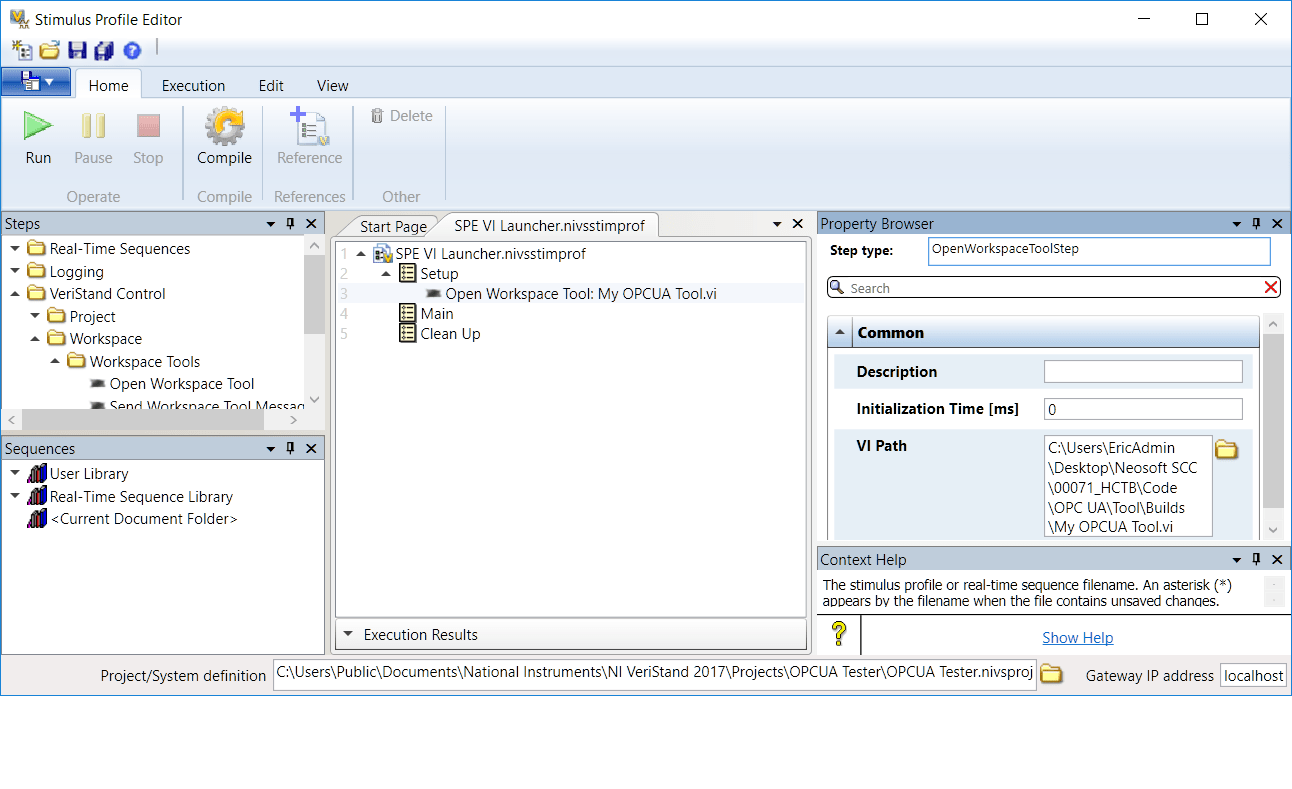
Calling a VI from the Stimulus Profile Editor: Yes, It’s Possible! bis
Yes, it is possible to call a VI directly from the Stimulus Profile Editor! Discover how to use this feature
How can we help you?
Receive a personalized response from our experts within 24 hours, with solutions tailored to your automation and data acquisition needs.